
Searching Bastrop County Criminal Dockets
The county's online starting point is the official Bastrop Odyssey Criminal Case Records form. Four search modes are offered there: Case, Defendant, Citation, and Attorney. Choose the mode first, then type a value. A case number usually pinpoints one case fastest. Citation mode wants the number exactly as printed, and defendant mode needs a first and last name at minimum.
Run an All-status search unless you truly need only Open or Closed cases. Date limits help with common names, but a tight range can screen out the case you want. Soundex is on by default and catches near spellings. Exact Name tightens the match. Leave personal details out of notes and public copies.
- Open Criminal Case Records and select Case, Defendant, Citation, or Attorney.
- Enter the exact case or citation number, or the name fields the form requests.
- Choose All, Open, or Closed and set a filed-date range only when useful.
- Open the case-number result and check the court, status, settings, events, and available documents.
- Confirm a key result or request a certified copy from the clerk for that court.
For a wider net, the Bastrop County case lookup pulls in more record types. Texas re:SearchTX is a separate layer that requires registration. eFileTexas handles new filings, not the county's historical docket.
Bastrop Criminal Search Fields
One empty search proves little. Each mode on the Odyssey form expects a different key. Name and date controls change the results too.
| Mode | Entry | Caution |
|---|---|---|
| Case | Case number, up to 30 characters | Keep punctuation and leading zeroes |
| Defendant | Last and first name; middle optional | Soundex broadens; Exact Name narrows |
| Citation | Citation number, up to 30 characters | It may not be filed yet |
| Attorney | Name or bar number | Not a party search |
The official criminal search source also carries status filters and sort options, and the county's search screen lays out these routes. Sorting only changes review order. It never changes the record itself.
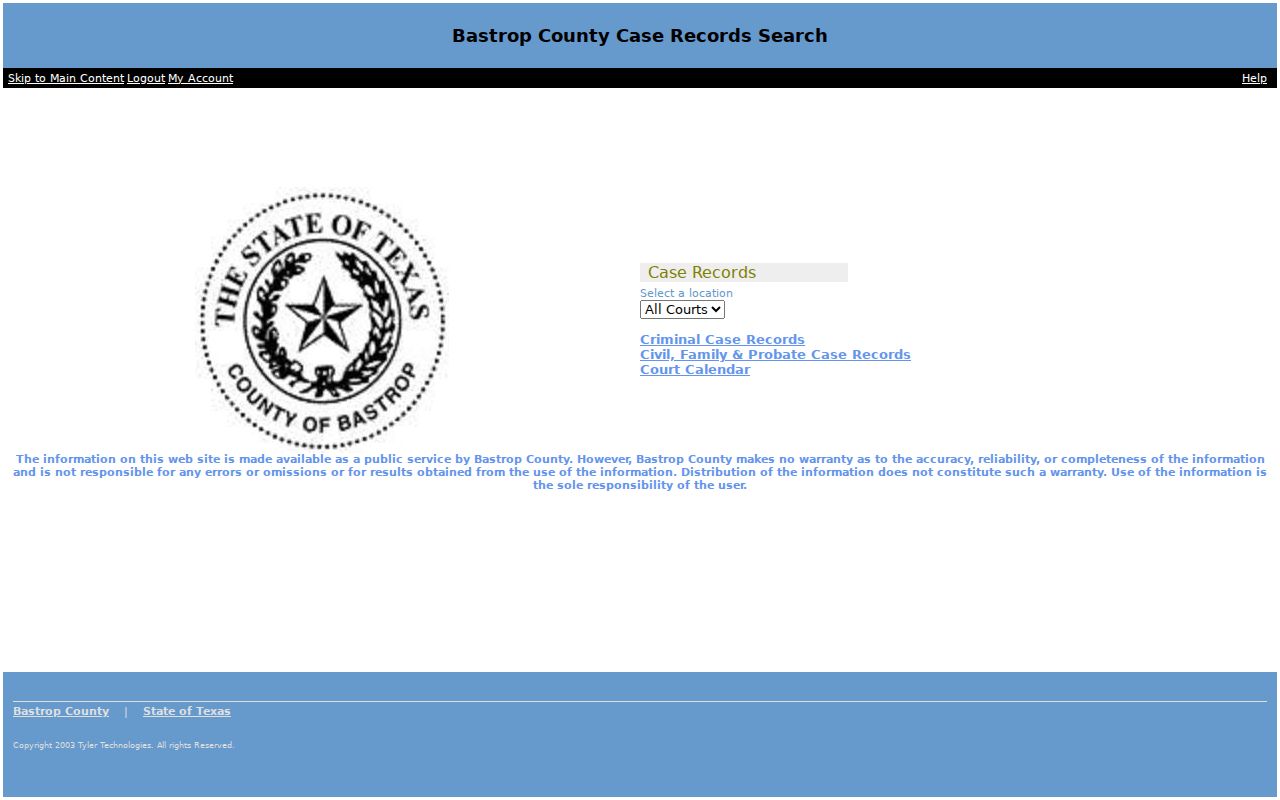
Match the search mode to the identifier you hold before concluding no case exists.
Inside a Bastrop County Criminal Docket
Think of a Bastrop County criminal docket as an index and event history, not a verdict. Check the court and case type first. From there, follow the filed date, settings, documents, orders, and final event in order. A defendant's name marks a party to a charge, nothing more. It does not prove guilt. A charge is never a final result.
| Case Number | The exact court identifier; no single universal local prefix was established in the research. |
|---|---|
| Court | The assigned district, County Court at Law, justice, or municipal court. |
| Filed Date | The date the case entered the system, which may differ from the event date. |
| Charge | The allegation shown in the record, not a finding or conviction. |
| Setting | A scheduled event that may later be reset, passed, or canceled. |
| Disposition | The recorded outcome; the judgment and event entry supply needed context. |
Open and Closed are portal labels only. A Closed flag does not say whether Bastrop County ended the case by dismissal, plea, judgment, transfer, or some other event.
Bastrop Criminal Status Terms
Status labels on a Bastrop County criminal docket describe procedure, not outcomes. Read them beside the dated entry and the order itself when one is available.
- Setting
- A scheduled court event, not always a trial.
- Regular docket day
- A County Court at Law scheduling day with many matters.
- Jury week
- A block for possible jury work, not proof that a case was tried.
- Disposition
- The outcome, which may be a plea, conviction, dismissal, deferred result, or other closure.
- Order
- A judge's action whose actual text controls its scope.
Check the entries around each label. The sequence usually explains more than the status field alone.
How a Criminal Case Moves
A criminal record builds as the court accepts the case and logs events and rulings. Not every case hits every step, and the docket may use a more precise event label. Even so, the sequence lets you read procedure without mistaking an accusation for an outcome.
Docket flow: Filing › Arraignment › Pretrial › Plea or Trial › Disposition › Sentencing
A calendar listing sits in the middle of that flow. It shows when court work is set, not what happened. Look at later entries for a reset, order, plea, trial result, or disposition.
Bastrop Felony and Misdemeanor Routes
The clerk split matters most in Bastrop County. The District Clerk keeps district court felony records. The County Clerk handles records for County Court at Law misdemeanors. Fine-only cases can stay with a justice court, and a city citation can stay with its municipal court.
| Matter | Court | Custodian |
|---|---|---|
| Felony | District Court | District Clerk |
| County misdemeanor | County Court at Law | County Clerk |
| Fine-only or JP matter | Justice Court | Precinct clerk |
| City citation | Municipal Court | City clerk |
The county collections page makes the felony and misdemeanor payment routes plain, and the official payment page shows that split directly.
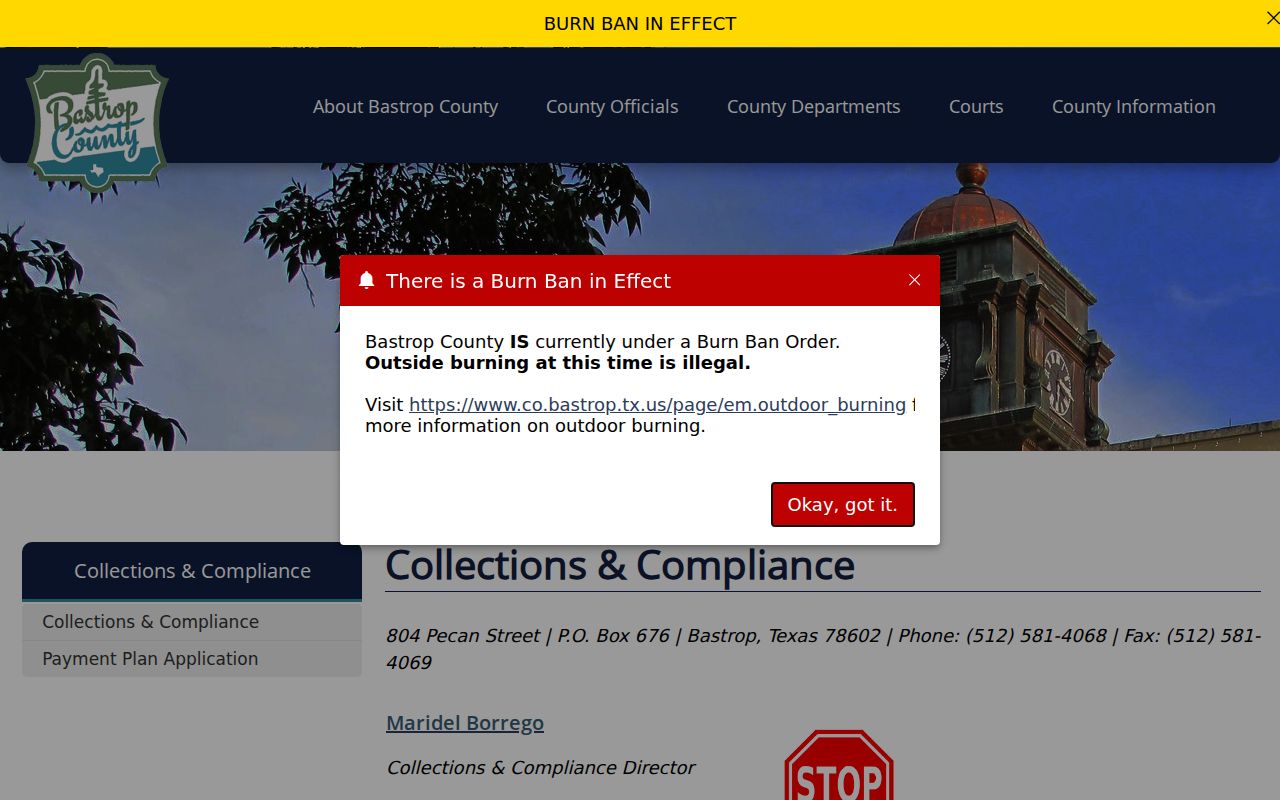
This can explain why payment fails even when a case appears in the portal.
Courts That Hold Criminal Dockets
Bastrop County's general trial layer has four district courts. They are the 21st, 335th, 423rd, and 465th. These hold original felony jurisdiction. County Court at Law serves as the misdemeanor branch. Four justice precincts hear fine-only matters and perform magistrate work. Bastrop, Elgin, and Smithville each keep municipal records for city-level cases.
The County Court at Law page links record and calendar resources. The official court page identifies the office behind that layer.
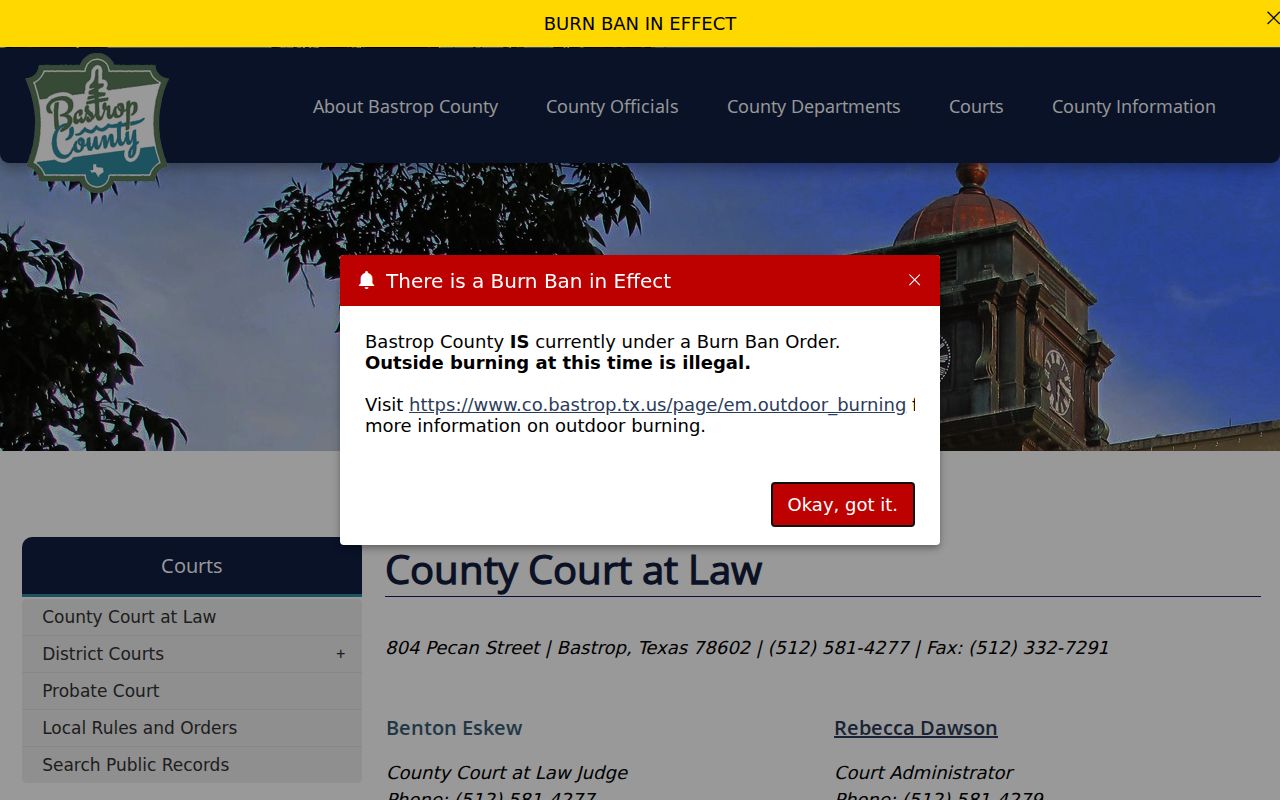
A county misdemeanor is still a misdemeanor, no matter which courthouse system lists it. When a search comes up empty, figure out the offense level and location before switching systems. A city matter may never touch the District Clerk.
Bastrop Criminal Calendar Checks
The Bastrop County Court Calendar allows searches by attorney, case, judicial officer, party or defendant, and date range. Pick Criminal to narrow the category. The published County Court at Law calendar also separates regular criminal docket days from jury weeks.
Treat any calendar as a snapshot. Note the range and the date you searched. If a setting is close, call the clerk and trust the latest court notice, since a date can move after an online search. A calendar only shows a scheduled event. Later Bastrop County criminal docket entries show what the court actually did.
Missing Bastrop Criminal Results
Type the citation exactly as it reads on the paper. If that pulls nothing in the Bastrop County criminal docket, switch the search to Defendant. JP Precinct 1 cautions that officers sometimes have not filed a citation yet. So keep checking weekly. Call the court if it never appears as the printed appearance date gets close.
A name search can miss for mundane reasons. Spelling slips, punctuation, initials, a prior name, Soundex, or a date range set too tight will all hide a case. Some records are sealed, expunged, protected, or simply not indexed. Another clerk may hold the file. Never work around a limit. Ask the right clerk whether the case is indexed and what public request route fits.
Facing a near deadline? Save the mode, filters, date, and result. Then contact the court listed on the notice or citation. Silence from a search does not mean no setting exists.
Bastrop Docket Entry Limits
Read a Bastrop County criminal docket entry as proof the court logged a procedural act. Nothing more. It is not a ruling on the merits. Charges can change. An order may cover only one count. A dismissal label may require the signed order for full context. Look at the whole sequence before you state any outcome.
Odyssey carries a public disclaimer. Bastrop County does not warrant the portal's accuracy, reliability, or completeness. So confirm with the clerk when a deadline, a certified history, or an exact disposition matters. Use the portal to locate the case and the responsible court. The clerk keeps the official file.
Sealed Dockets and Public Access
Texas leans toward openness. But public access does not open every field or image in a Bastrop County criminal docket. A case shell may show while a document stays hidden. Juvenile records, victim information, expunctions, nondisclosure orders, sealed files, and protected material each follow their own rules. Do not republish sensitive identity or financial data.
Key access rules:
Texas Judicial Branch open-records policy explains that Rule 12, not the ordinary executive-agency process, governs judicial records.
Texas Rule of Civil Procedure 76a sets the court-record sealing standard.
Texas Family Code Chapter 58 contains juvenile confidentiality and sealing rules.
A focused request works best. Name the case, the court, the date range, and the exact item you want. Route felony requests to the District Clerk, County Court at Law requests to the County Clerk, JP matters to the precinct, and municipal matters to the city clerk. For certified copies, ask the clerk who keeps the record rather than relying on an Odyssey printout.